Written by
Published on
May 8, 2026


Maintaining an optimal indoor climate is essential for productivity and comfort. At LakeFront Air Conditioning LLC, we provide advanced commercial HVAC systems that deliver efficient heating, ventilation, and air conditioning tailored specifically to your business requirements. This guide explains system types, installation, maintenance, and energy-efficiency considerations. Many businesses face fluctuating temperatures, high energy costs, and poor air quality that harm operations and employee satisfaction. Understanding advanced HVAC capabilities allows you to implement solutions that improve comfort and reduce operating costs. We cover expert climate-control solutions, system types, installation, maintenance, energy-efficiency factors, and services from LakeFront Air Conditioning LLC.
Our advanced commercial HVAC systems deliver tailored climate control for your facility. We use smart thermostats and variable‑speed compressors to adapt to changing conditions and maintain consistent comfort for employees and customers. Investing in these systems improves energy efficiency, lowers operating costs, and enhances indoor air quality for a healthier work environment.
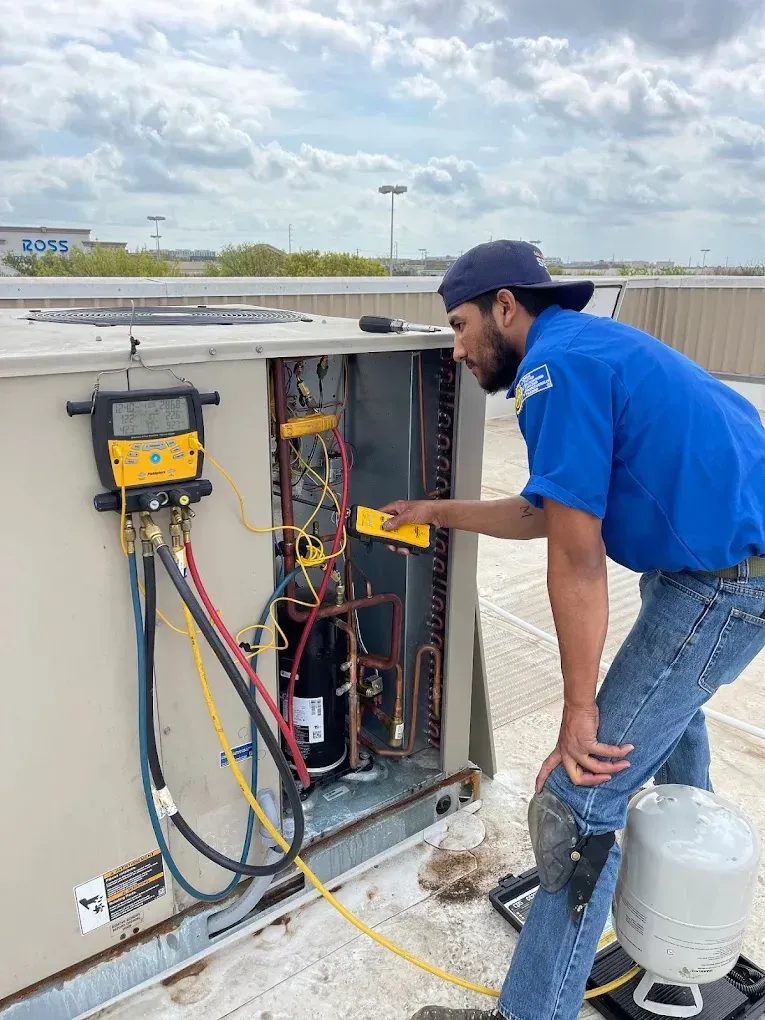
LakeFront Air Conditioning LLC provides advanced commercial HVAC systems and services for businesses and industrial clients in Lake Havasu City, AZ, and surrounding areas. Our expertise helps you achieve optimal climate control while minimizing energy use.
Beyond equipment supply, our expert solutions often combine system selection, professional design, and ongoing monitoring. Typical project elements include load and ventilation analyses, equipment selection for capacity and redundancy, integration with building automation or energy-management platforms, and a documented maintenance schedule. For larger facilities, our services can extend to retrofits, tenant-fit adaptations, commissioning after installation, and ongoing performance tracking to verify that systems meet design targets and business needs.
Selecting the right HVAC type is essential to optimize your building's climate control. Each option offers distinct features and benefits that address different operational needs.
Air conditioning maintains comfortable indoor temperatures during hot weather. Common options include:
When evaluating air conditioning options, consider capacity planning to match peak and part-load conditions, staging strategies for multiple units, and whether rooftop packaged units, split systems, or chiller-plus-air-handler arrangements better suit your building. Central systems are often best for multi-zone coordination and larger footprints, while ductless systems can be a cost-effective solution for retrofits or segmented interior spaces where ductwork is impractical.
Heating systems keep indoor spaces comfortable during colder months. Common solutions include:
The choice of heating technology depends on fuel availability, local climate, integration with cooling systems, and the building’s thermal distribution method (forced air versus hydronic). Heat pumps are often preferred where electricity is readily available and where both heating and cooling are needed from the same plant. Furnaces or boilers may still be appropriate for industrial or large-floorplate environments where high heating loads or existing hydronic infrastructure exist.
Ductless systems offer flexibility and efficiency, making them ideal for spaces without ductwork. They allow targeted heating and cooling and are generally easier to install than ducted systems.
Ductless mini-split indoor units come in multiple styles such as wall-mounted, ceiling cassette, and floor console. They can be combined with outdoor condensing units that serve several indoor heads. For tenant spaces or phased retrofits, ductless systems reduce disruption and can be installed with simple refrigerant lines instead of full ductworks. We consider acoustic performance, condensate management, and indoor unit placement during design to maximize comfort and aesthetics.
Geothermal systems use the earth's stable temperature for heating and cooling. They deliver notable energy savings, lower carbon emissions, and typically offer a longer operational life than conventional systems.
Geothermal solutions require site suitability and ground-loop installation planning. They are most attractive where land or borehole access allows for efficient loop placement and where long-term operating cost reductions and sustainability goals justify higher upfront site work. Proper design ensures the heat-exchange loop is sized for stable temperatures and consistent performance.
Solar HVAC systems use solar energy to reduce reliance on conventional power. They can lower energy bills, support sustainability goals, and may qualify for incentives or rebates.
Solar can be used to offset electrical loads for compressors, fans, or controls and can be combined with battery storage or demand-response strategies to smooth consumption. When considering solar integration, we evaluate roof orientation and structural capacity, expected onsite demand patterns, and how solar production will interact with daily HVAC load profiles.
Proper installation requires careful planning and execution. Our successful process includes:
Beyond these core steps, our complete installation process includes load calculations (heating and cooling load), ventilation and indoor air quality planning, equipment layout and duct/riser routing, obtaining necessary permits, coordination with electrical and structural trades, and a pre-commissioning checklist. Commissioning verifies that sensors, controls, and equipment operate to design intent and that balancing and airflow meet specifications. Well-documented commissioning and handover also help your facilities staff operate the system efficiently after installation.
Project timing and logistics are important for minimizing business disruption. We develop a staged installation plan, provide temporary climate-control measures during construction, and maintain clear communication about access requirements and expected timelines to protect your ongoing operations. Our certified technicians provide detailed start-up reports, warranties, and operator training at handover to ensure you inherit a reliable, maintainable system.
Regular maintenance preserves system efficiency and extends equipment life. Effective maintenance prevents costly breakdowns and keeps performance consistent.
Our regular maintenance plans typically include:
Our maintenance plans can be tiered to match building criticality: basic preventive inspections for general commercial spaces, enhanced plans including seasonal filter and coil care for retail or office environments, and priority-level contracts for mission-critical facilities where downtime has high business impact. We maintain a documented log of inspections, repairs, and parts replaced so historical trends can inform future budgeting and replacement planning.
Regular filter changes are simple but essential. Clean filters trap dust and allergens, improve indoor air quality, and prevent airflow restriction. We recommend replacing filters every 1–3 months depending on usage and environmental factors.
Choosing the correct filter efficiency, verifying proper filter installation, and confirming that filter housings seal correctly are all important for performance. In sensitive environments such as medical offices or laboratories, higher-efficiency filtration and a more frequent replacement schedule may be appropriate. Our maintenance technicians can recommend MERV or equivalent ratings that balance air quality and fan energy impacts.
Ductwork maintenance supports optimal HVAC performance. Keeping ducts clean, sealing leaks, and maintaining proper airflow improve distribution and reduce energy waste.
Our duct inspection includes visual checks, pressure testing to detect leakage, and cleaning when evidence of contamination or blockage exists. Proper sealing and insulation of ducts in unconditioned spaces reduce thermal losses. We also verify that dampers, grilles, and diffusers are balanced so each zone receives the intended airflow for occupant comfort and efficient system operation.
Energy efficiency should guide system selection and operation. Addressing efficiency can yield meaningful cost savings over a system's lifetime.
SEER (Seasonal Energy Efficiency Ratio) measures air‑conditioner efficiency. A higher SEER indicates better energy performance. Selecting higher‑SEER equipment can lead to substantial long‑term savings and lower environmental impact.
When comparing SEER ratings, we evaluate part-load performance and how the rating translates to expected operating hours for your facility. Higher-SEER equipment often uses variable-speed compressors and more advanced controls that improve part-load efficiency, which is critical because most commercial systems operate far below peak capacity for much of the year.
Smart technology enhances efficiency and user control. Remote monitoring, learning thermostats, and automation let you optimize energy use while maintaining comfort.
Integration with building automation systems enables schedule-based setbacks, demand response participation, and alarm-driven servicing. Remote diagnostics can flag performance drift or component faults, allowing our technicians to address issues proactively and often before occupants notice problems. We consider communication protocols such as BACnet or common proprietary interfaces when selecting controllers to ensure future interoperability.
Zoning systems let you target heating and cooling to specific areas, reducing waste and keeping occupied spaces at the right temperature.
Effective zoning requires correct thermostat placement, appropriate damper control or multiple smaller units, and careful airflow balancing. For mixed-use buildings, programmable zoning helps ensure unoccupied areas are not conditioned unnecessarily while key operational areas remain at required setpoints.
Energy recovery ventilators (ERVs) help maintain indoor air quality while conserving energy. They transfer heat and moisture between incoming and outgoing air streams, introduce fresh air with minimal energy loss, and reduce the load on HVAC systems.
ERVs are particularly valuable in climates where fresh ventilation would otherwise add large heating or cooling loads. Properly sized and maintained ERVs maintain balanced ventilation, reduce HVAC runtime, and help meet ventilation standards while limiting energy penalties associated with bringing outside air into conditioned spaces.
Investing in advanced HVAC affects your business's costs. Understanding installation, maintenance, and operational expenses helps you make informed decisions about expected returns.
When assessing total cost of ownership, look beyond first-cost to lifecycle expenses: anticipated energy use, scheduled maintenance, filter and part replacements, and potential downtime costs. Consider the value of measures that lower peak demand or shift energy use to lower-cost hours, and whether financing or leasing options are available to spread capital costs while capturing operational savings.
Our case studies show financial gains from energy‑efficient HVAC upgrades: lower energy bills, improved employee productivity due to better comfort, and strong long‑term ROI as operational costs decline.
Real-world projects typically document ROI using a combination of measured energy consumption before and after upgrades, verification of controls setpoints and schedules, and estimation of maintenance savings from more reliable equipment. For budgeting, facilities managers often use simple payback and discounted cash-flow methods to compare alternatives and make procurement decisions consistent with operational priorities.
At LakeFront Air Conditioning LLC, we provide a range of services to help your business achieve consistent, efficient climate control.
Our service plans are customized to your business's operational needs to ensure HVAC systems run efficiently and reliably.
Customized plans typically detail inspection frequency, seasonal tasks such as spring AC tune-up and fall heating checks, parts allowances, response time commitments, and optional remote-monitoring packages. Plans can include energy audits, performance benchmarking, and prioritized scheduling for customers with time-sensitive operations. Documentation and clear escalation paths are standard features so your facility managers can monitor contract performance and adjust scope as needs evolve.
We offer 24/7 emergency support and warranty guarantees so you receive prompt assistance and protection for your HVAC investment.
Emergency support agreements often include priority dispatch, diagnostic support, and temporary solutions to keep essential systems running while permanent repairs are scheduled. Our warranty management services help coordinate covered repairs and, when applicable, streamline interactions with manufacturers to reduce delay and administrative burden on you.
Expert HVAC support is essential for maintaining reliable climate control in commercial settings. LakeFront Air Conditioning LLC serves businesses in Lake Havasu City, AZ.
For reliable commercial HVAC solutions, LakeFront Air Conditioning LLC is available to assist businesses in Lake Havasu City, AZ, and surrounding areas.
When preparing to contact us, gather basic information to speed the initial assessment: building square footage, age of current HVAC equipment, recent maintenance history, current comfort complaints, and any access constraints. Having this information available allows our technicians to offer a preliminary scope and estimate for onsite evaluation.
To schedule installation, maintenance, or repairs, please reach out to LakeFront Air Conditioning LLC through our website or contact form to discuss your needs and arrange service.
During scheduling, expect our technician to confirm scope (inspection, immediate repair, or full system assessment), estimated arrival window, and any site requirements such as keys or access hours. For larger installation projects, an on-site visit will typically follow to collect measurements, perform load calculations, and document architectural or structural constraints before a detailed proposal is issued.
Take the next step toward optimizing your business’s climate control with LakeFront Air Conditioning LLC. Our expert team is ready to provide tailored HVAC solutions that enhance comfort, improve energy efficiency, and reduce operating costs.
Contact us today to schedule a consultation and discover how our advanced commercial HVAC systems and services can support your business goals.
Maintaining an optimal indoor climate is essential for productivity and comfort. At LakeFront Air Conditioning LLC, we provide advanced commercial HVAC systems that deliver efficient heating, ventilation, and air conditioning tailored specifically to your business requirements. This guide explains system types, installation, maintenance, and energy-efficiency considerations. Many businesses face fluctuating temperatures, high energy costs, and poor air quality that harm operations and employee satisfaction. Understanding advanced HVAC capabilities allows you to implement solutions that improve comfort and reduce operating costs. We cover expert climate-control solutions, system types, installation, maintenance, energy-efficiency factors, and services from LakeFront Air Conditioning LLC.
Our advanced commercial HVAC systems deliver tailored climate control for your facility. We use smart thermostats and variable‑speed compressors to adapt to changing conditions and maintain consistent comfort for employees and customers. Investing in these systems improves energy efficiency, lowers operating costs, and enhances indoor air quality for a healthier work environment.
LakeFront Air Conditioning LLC provides advanced commercial HVAC systems and services for businesses and industrial clients in Lake Havasu City, AZ, and surrounding areas. Our expertise helps you achieve optimal climate control while minimizing energy use.
Beyond equipment supply, our expert solutions often combine system selection, professional design, and ongoing monitoring. Typical project elements include load and ventilation analyses, equipment selection for capacity and redundancy, integration with building automation or energy-management platforms, and a documented maintenance schedule. For larger facilities, our services can extend to retrofits, tenant-fit adaptations, commissioning after installation, and ongoing performance tracking to verify that systems meet design targets and business needs.
Selecting the right HVAC type is essential to optimize your building's climate control. Each option offers distinct features and benefits that address different operational needs.
Air conditioning maintains comfortable indoor temperatures during hot weather. Common options include:
When evaluating air conditioning options, consider capacity planning to match peak and part-load conditions, staging strategies for multiple units, and whether rooftop packaged units, split systems, or chiller-plus-air-handler arrangements better suit your building. Central systems are often best for multi-zone coordination and larger footprints, while ductless systems can be a cost-effective solution for retrofits or segmented interior spaces where ductwork is impractical.
Heating systems keep indoor spaces comfortable during colder months. Common solutions include:
The choice of heating technology depends on fuel availability, local climate, integration with cooling systems, and the building’s thermal distribution method (forced air versus hydronic). Heat pumps are often preferred where electricity is readily available and where both heating and cooling are needed from the same plant. Furnaces or boilers may still be appropriate for industrial or large-floorplate environments where high heating loads or existing hydronic infrastructure exist.
Ductless systems offer flexibility and efficiency, making them ideal for spaces without ductwork. They allow targeted heating and cooling and are generally easier to install than ducted systems.
Ductless mini-split indoor units come in multiple styles such as wall-mounted, ceiling cassette, and floor console. They can be combined with outdoor condensing units that serve several indoor heads. For tenant spaces or phased retrofits, ductless systems reduce disruption and can be installed with simple refrigerant lines instead of full ductworks. We consider acoustic performance, condensate management, and indoor unit placement during design to maximize comfort and aesthetics.
Geothermal systems use the earth's stable temperature for heating and cooling. They deliver notable energy savings, lower carbon emissions, and typically offer a longer operational life than conventional systems.
Geothermal solutions require site suitability and ground-loop installation planning. They are most attractive where land or borehole access allows for efficient loop placement and where long-term operating cost reductions and sustainability goals justify higher upfront site work. Proper design ensures the heat-exchange loop is sized for stable temperatures and consistent performance.
Solar HVAC systems use solar energy to reduce reliance on conventional power. They can lower energy bills, support sustainability goals, and may qualify for incentives or rebates.
Solar can be used to offset electrical loads for compressors, fans, or controls and can be combined with battery storage or demand-response strategies to smooth consumption. When considering solar integration, we evaluate roof orientation and structural capacity, expected onsite demand patterns, and how solar production will interact with daily HVAC load profiles.
Proper installation requires careful planning and execution. Our successful process includes:
Beyond these core steps, our complete installation process includes load calculations (heating and cooling load), ventilation and indoor air quality planning, equipment layout and duct/riser routing, obtaining necessary permits, coordination with electrical and structural trades, and a pre-commissioning checklist. Commissioning verifies that sensors, controls, and equipment operate to design intent and that balancing and airflow meet specifications. Well-documented commissioning and handover also help your facilities staff operate the system efficiently after installation.
Project timing and logistics are important for minimizing business disruption. We develop a staged installation plan, provide temporary climate-control measures during construction, and maintain clear communication about access requirements and expected timelines to protect your ongoing operations. Our certified technicians provide detailed start-up reports, warranties, and operator training at handover to ensure you inherit a reliable, maintainable system.
Regular maintenance preserves system efficiency and extends equipment life. Effective maintenance prevents costly breakdowns and keeps performance consistent.
Our regular maintenance plans typically include:
Our maintenance plans can be tiered to match building criticality: basic preventive inspections for general commercial spaces, enhanced plans including seasonal filter and coil care for retail or office environments, and priority-level contracts for mission-critical facilities where downtime has high business impact. We maintain a documented log of inspections, repairs, and parts replaced so historical trends can inform future budgeting and replacement planning.
Regular filter changes are simple but essential. Clean filters trap dust and allergens, improve indoor air quality, and prevent airflow restriction. We recommend replacing filters every 1–3 months depending on usage and environmental factors.
Choosing the correct filter efficiency, verifying proper filter installation, and confirming that filter housings seal correctly are all important for performance. In sensitive environments such as medical offices or laboratories, higher-efficiency filtration and a more frequent replacement schedule may be appropriate. Our maintenance technicians can recommend MERV or equivalent ratings that balance air quality and fan energy impacts.
Ductwork maintenance supports optimal HVAC performance. Keeping ducts clean, sealing leaks, and maintaining proper airflow improve distribution and reduce energy waste.
Our duct inspection includes visual checks, pressure testing to detect leakage, and cleaning when evidence of contamination or blockage exists. Proper sealing and insulation of ducts in unconditioned spaces reduce thermal losses. We also verify that dampers, grilles, and diffusers are balanced so each zone receives the intended airflow for occupant comfort and efficient system operation.
Energy efficiency should guide system selection and operation. Addressing efficiency can yield meaningful cost savings over a system's lifetime.
SEER (Seasonal Energy Efficiency Ratio) measures air‑conditioner efficiency. A higher SEER indicates better energy performance. Selecting higher‑SEER equipment can lead to substantial long‑term savings and lower environmental impact.
When comparing SEER ratings, we evaluate part-load performance and how the rating translates to expected operating hours for your facility. Higher-SEER equipment often uses variable-speed compressors and more advanced controls that improve part-load efficiency, which is critical because most commercial systems operate far below peak capacity for much of the year.
Smart technology enhances efficiency and user control. Remote monitoring, learning thermostats, and automation let you optimize energy use while maintaining comfort.
Integration with building automation systems enables schedule-based setbacks, demand response participation, and alarm-driven servicing. Remote diagnostics can flag performance drift or component faults, allowing our technicians to address issues proactively and often before occupants notice problems. We consider communication protocols such as BACnet or common proprietary interfaces when selecting controllers to ensure future interoperability.
Zoning systems let you target heating and cooling to specific areas, reducing waste and keeping occupied spaces at the right temperature.
Effective zoning requires correct thermostat placement, appropriate damper control or multiple smaller units, and careful airflow balancing. For mixed-use buildings, programmable zoning helps ensure unoccupied areas are not conditioned unnecessarily while key operational areas remain at required setpoints.
Energy recovery ventilators (ERVs) help maintain indoor air quality while conserving energy. They transfer heat and moisture between incoming and outgoing air streams, introduce fresh air with minimal energy loss, and reduce the load on HVAC systems.
ERVs are particularly valuable in climates where fresh ventilation would otherwise add large heating or cooling loads. Properly sized and maintained ERVs maintain balanced ventilation, reduce HVAC runtime, and help meet ventilation standards while limiting energy penalties associated with bringing outside air into conditioned spaces.
Investing in advanced HVAC affects your business's costs. Understanding installation, maintenance, and operational expenses helps you make informed decisions about expected returns.
When assessing total cost of ownership, look beyond first-cost to lifecycle expenses: anticipated energy use, scheduled maintenance, filter and part replacements, and potential downtime costs. Consider the value of measures that lower peak demand or shift energy use to lower-cost hours, and whether financing or leasing options are available to spread capital costs while capturing operational savings.
Our case studies show financial gains from energy‑efficient HVAC upgrades: lower energy bills, improved employee productivity due to better comfort, and strong long‑term ROI as operational costs decline.
Real-world projects typically document ROI using a combination of measured energy consumption before and after upgrades, verification of controls setpoints and schedules, and estimation of maintenance savings from more reliable equipment. For budgeting, facilities managers often use simple payback and discounted cash-flow methods to compare alternatives and make procurement decisions consistent with operational priorities.
At LakeFront Air Conditioning LLC, we provide a range of services to help your business achieve consistent, efficient climate control.
Our service plans are customized to your business's operational needs to ensure HVAC systems run efficiently and reliably.
Customized plans typically detail inspection frequency, seasonal tasks such as spring AC tune-up and fall heating checks, parts allowances, response time commitments, and optional remote-monitoring packages. Plans can include energy audits, performance benchmarking, and prioritized scheduling for customers with time-sensitive operations. Documentation and clear escalation paths are standard features so your facility managers can monitor contract performance and adjust scope as needs evolve.
We offer 24/7 emergency support and warranty guarantees so you receive prompt assistance and protection for your HVAC investment.
Emergency support agreements often include priority dispatch, diagnostic support, and temporary solutions to keep essential systems running while permanent repairs are scheduled. Our warranty management services help coordinate covered repairs and, when applicable, streamline interactions with manufacturers to reduce delay and administrative burden on you.
Expert HVAC support is essential for maintaining reliable climate control in commercial settings. LakeFront Air Conditioning LLC serves businesses in Lake Havasu City, AZ.
For reliable commercial HVAC solutions, LakeFront Air Conditioning LLC is available to assist businesses in Lake Havasu City, AZ, and surrounding areas.
When preparing to contact us, gather basic information to speed the initial assessment: building square footage, age of current HVAC equipment, recent maintenance history, current comfort complaints, and any access constraints. Having this information available allows our technicians to offer a preliminary scope and estimate for onsite evaluation.
To schedule installation, maintenance, or repairs, please reach out to LakeFront Air Conditioning LLC through our website or contact form to discuss your needs and arrange service.
During scheduling, expect our technician to confirm scope (inspection, immediate repair, or full system assessment), estimated arrival window, and any site requirements such as keys or access hours. For larger installation projects, an on-site visit will typically follow to collect measurements, perform load calculations, and document architectural or structural constraints before a detailed proposal is issued.
Take the next step toward optimizing your business’s climate control with LakeFront Air Conditioning LLC. Our expert team is ready to provide tailored HVAC solutions that enhance comfort, improve energy efficiency, and reduce operating costs.
Contact us today to schedule a consultation and discover how our advanced commercial HVAC systems and services can support your business goals.